Reasoning Language for Teaching Secondary Algebra

Principal Investigator:

Reasoning Language for Teaching Secondary Algebra (ReLaTe-SA) is working in partnership with the San Antonio Independent School District to investigate the algebraic reasoning and discourse tools that secondary mathematics teachers use to make algebra concepts accessible for students and orchestrate and respond to student work on mathematics tasks. We are investigating teachers' algebraic discourse through written surveys, interviews, and a year-long professional development program focused on enhancing students' opportunities for algebraic reasoning in the classroom.

Click image to preview:
Target Audience:

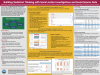
Professional Development Supports for Teaching Bioinformatics through Mobile Learning

Principal Investigator:
Bioinformatics is an emerging area of research that develops new knowledge through computational analysis of vast biological data. This project investigates the professional development (PD) supports needed for teaching bioinformatics at the high school. Building from a robust literature in PD design research, project team worked with science teachers to co-design instructional modules to engage students with core bioinformatics concepts and data literacies, by focusing on local community health issues supported through mobile learning activities.
Click image to preview:
Target Audience:

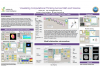
Professional Development for K-12 Science Teachers in Linguistically Diverse Classrooms

Principal Investigator:
A sustained professional development program designed to support teachers who teach linguistically diverse group of English learners (ELs). It targets science teachers who teach Grade 9-12 courses in an urban high school that enrolls immigrants and former refugees. Roughly 45% of the student population are classified as ELs and collectively speak more than 40 different languages. Our team engages science teachers in this school in online PD workshops and lesson study throughout a school year.
Click image to preview:
Target Audience:

PBS News Hour Student Reporting Labs StoryMaker: STEM-Integrated Student Journalism

Principal Investigator:
Sneak peek at StoryMaker, a video storytelling platform /educator co-learning community supporting students to produce videos about STEM projects.
PI: Leah Clapman, PBS NewsHour
Click image to preview:
Target Audience:

Misconceptions Oriented Standards-Based Assessment Resource for Teachers of High School Physical Sciences (MOSART HSPS)

Principal Investigator:

MOSART HS PS developed assessment tools based on both NRC Standards and NGSS for high school chemistry and physics. The 500 new test items were combined into instruments and validated by content experts. Comprehensive data from a nationally representative sample of 12,000 high school students and their teachers measures the content knowledge of both groups and allows the estimation of item characteristics. Pre- and post-tests associate yearly knowledge gains with teacher characteristics and pedagogies used.

Click image to preview:
Discipline/Topic:
Target Audience:
Learning Trajectories as a Complete Early Mathematics Intervention: Achieving Efficacies of Economies at Scale

Principal Investigator:
The ULTIMATE (Understanding Learning Trajectories In Math: Advancing Teacher Education) project will evaluate Learning Trajectories as a complete early mathematics intervention by supporting teachers in deepening their understanding of how children learn mathematics and how to incorporate this understanding. Drs. Clements and Sarama have built a professional development tool, called Learning and Teaching with Learning Trajectories, or [LT]2. The team will investigate the positive impacts both in supporting teachers and on students' learning of mathematics.
Click image to preview:
Target Audience:

Investigating Productive Use of High-Leverage Student Mathematical Thinking (Collaborative Research: Peterson and Stockero)

Principal Investigator:

The Building on MOSTs project focuses on improving the teaching of secondary school mathematics by exploring the teaching practice of building on MOSTs (Mathematical Opportunities in Student Thinking). We cyclically work with teachers to enact the practice, analyze those enactments, and refine our understanding of the practice. Building consists of four elements: (1) Establish, (2) Grapple Toss, (3) Conduct, and (4) Make Explicit.
PI: Keith Leatham, Brigham Young University

Click image to preview:
Discipline/Topic:
Target Audience:
Improving Grades 6-8 Students' Mathematics Achievement in Modeling and Problem Solving through Effective Sequencing of Instructional Practices

Principal Investigator:

With operating title Researching Order of Teaching (ROOT), this project brings together 100 middle grades mathematics teachers in a teacher-researcher alliance to articulate effective instructional practices for promoting modeling and problem-solving achievement. Strategies center around Explicit Attention to Concepts and Student Opportunities to Struggle, culminating in a randomized cluster crossover trial. The poster includes results from the first two years, featuring professional development materials, a video observation tool, and findings from classroom studies.

Click image to preview:
Target Audience:

From Access to Sustainability: Investigating Ways to Foster Sustainable Use of Computational Modeling in K-12 Science Classrooms

Principal Investigator:

Our vision is to make computational modeling a sustained practice in middle school science classrooms. We are working closely with teachers to design a tool and curricula that integrate computational modeling with data practices and enables students to move towards unpacking models and their underlying assumptions. Our research questions involve investigating 1. students modeling trajectories in this environment; 2. how classrooms norms develop over time; and, 3. the interplay between computational modeling and data practices.

Click image to preview:
Target Audience:

Fostering Equitable Groupwork to Promote Conceptual Mathematics Learning

Principal Investigator:
This project will document how middle grades mathematics students learn equitable collaboration through an ongoing effort to implement groupwork using the model of Complex Instruction. The primary purpose of this study is to describe how 6th-7th grade students learn to collaborate with one another to make sense of mathematics, and how students and their teacher negotiate what constitutes equitable collaboration.
Click image to preview:
Target Audience: