Gaming/Virtual Environments
Gaming SIG
Open to all grantees
This group will discuss the gaming/virtual environment work showcased earlier in the day and successful approaches to common challenges.
Multimedia Design Process: How to Make the Bad Stuff Good
Participants will learn how designers work through early versions of games to arrive at final products. As part of the workshop, participants will review and critique early prototypes of work in progress to the final version.
As educators, you may be skilled at identifying a really good educational product. You can review an educational game and, based on observation and testing (or your own developed intuition), you can know if it is effective and engaging. The more difficult task includes learning how to develop a multimedia product—reviewing early prototypes of a game or animation, and changing it many times so that it meets the learning goals while also engaging potential students. This process often involves dumping many unsuccessful attempts as well as starting over.
Interactive Visualizations, Simulations, and Games for Science and Math Learning: Comparing Goals, Affordances, and Challenges across Approaches
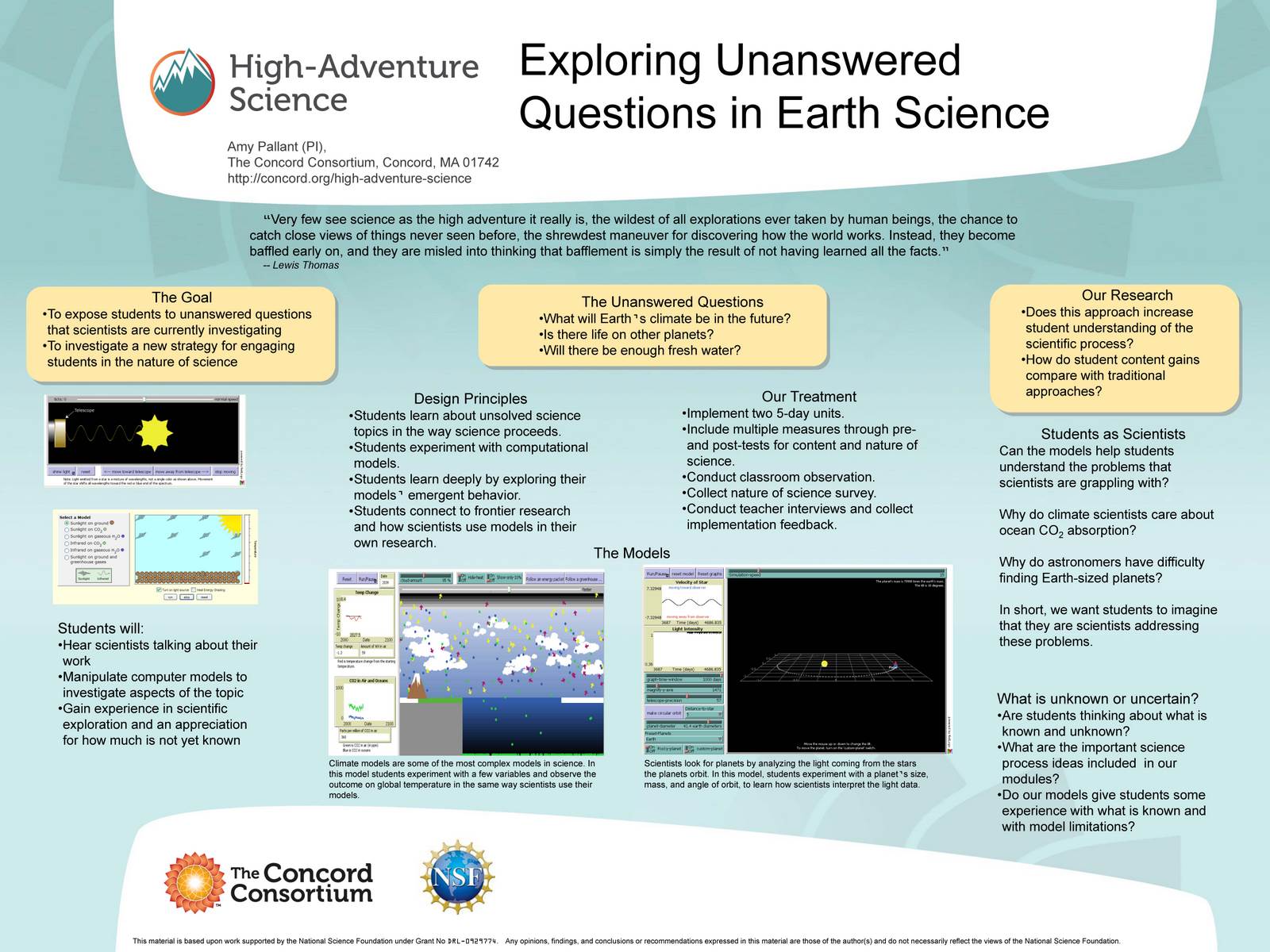
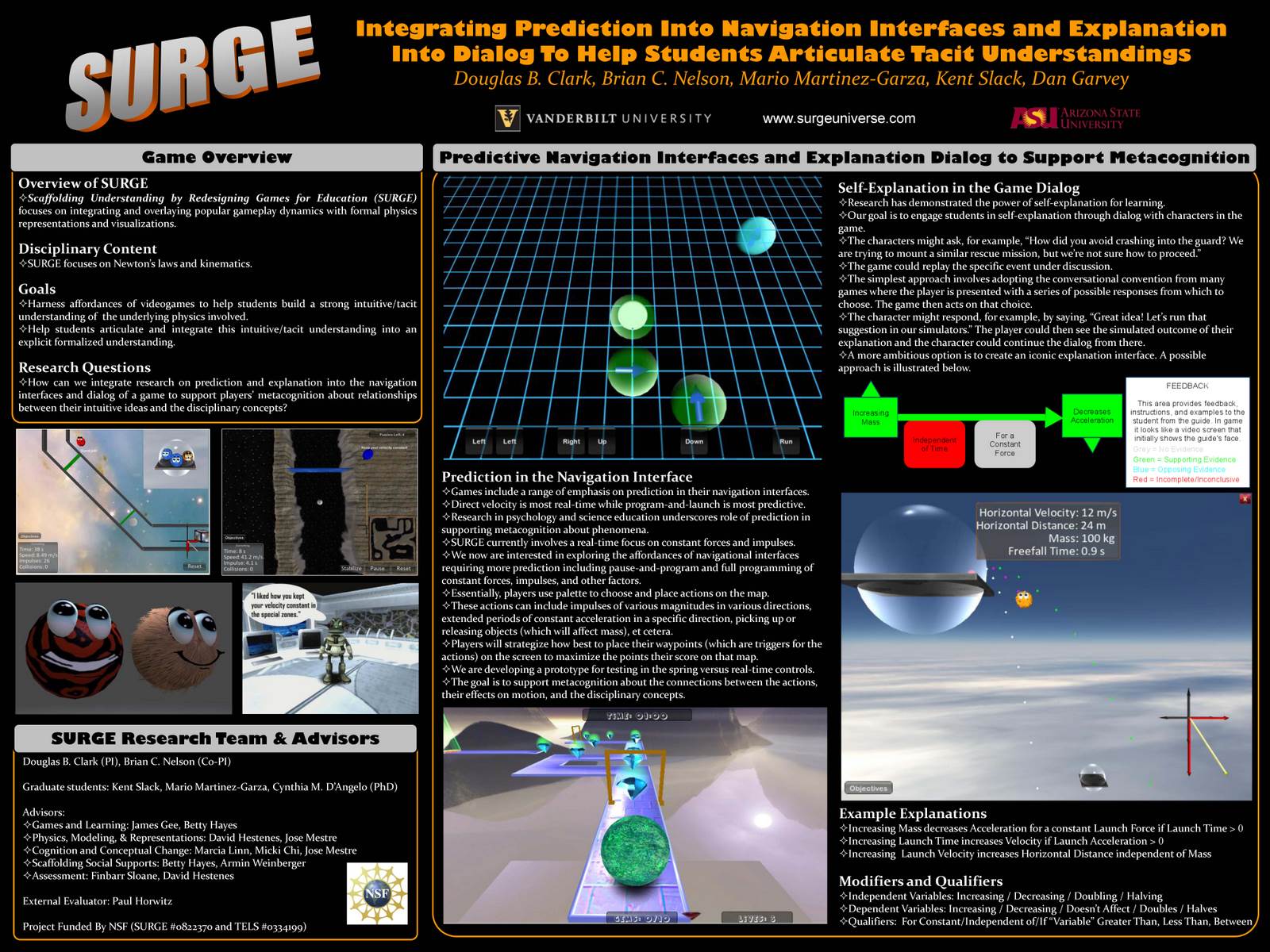
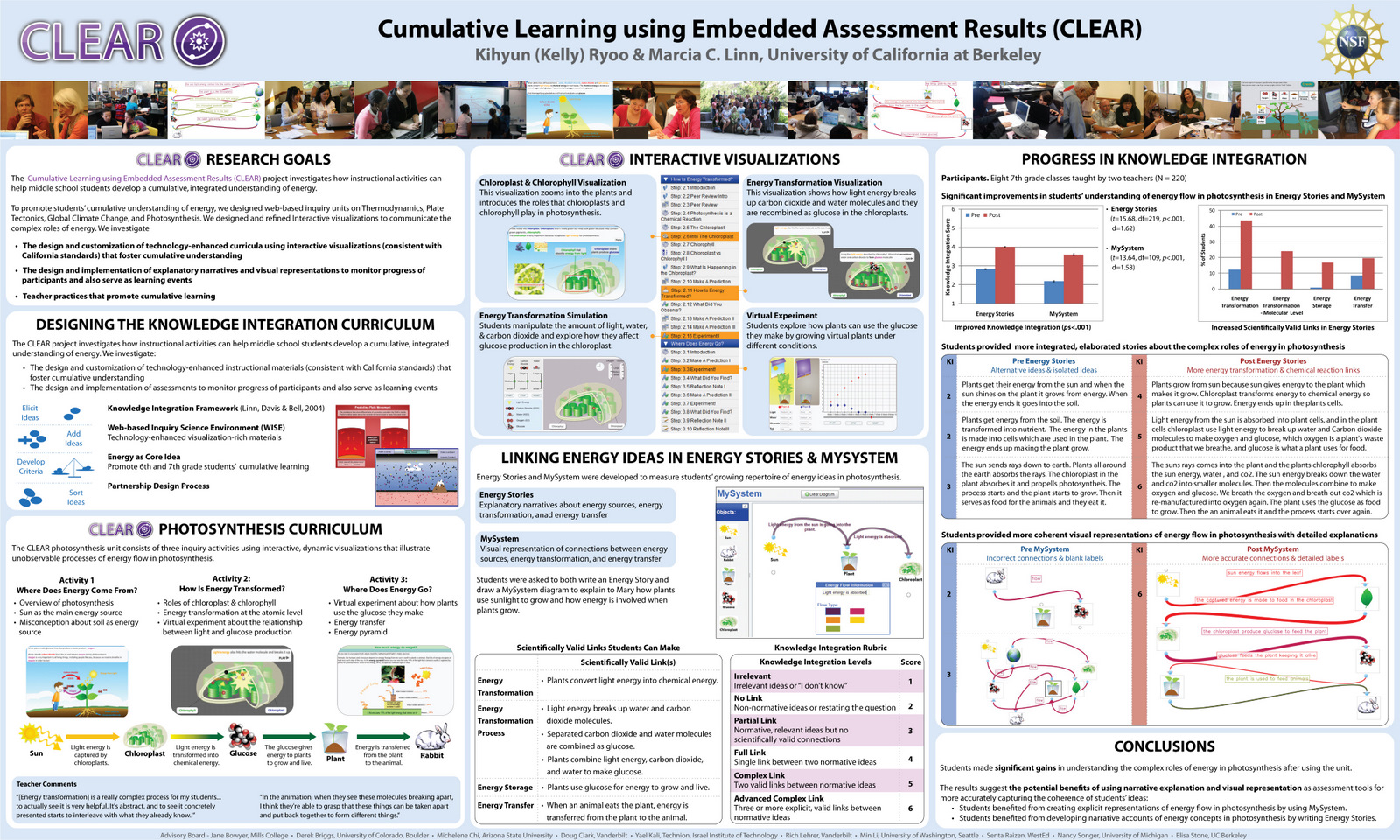
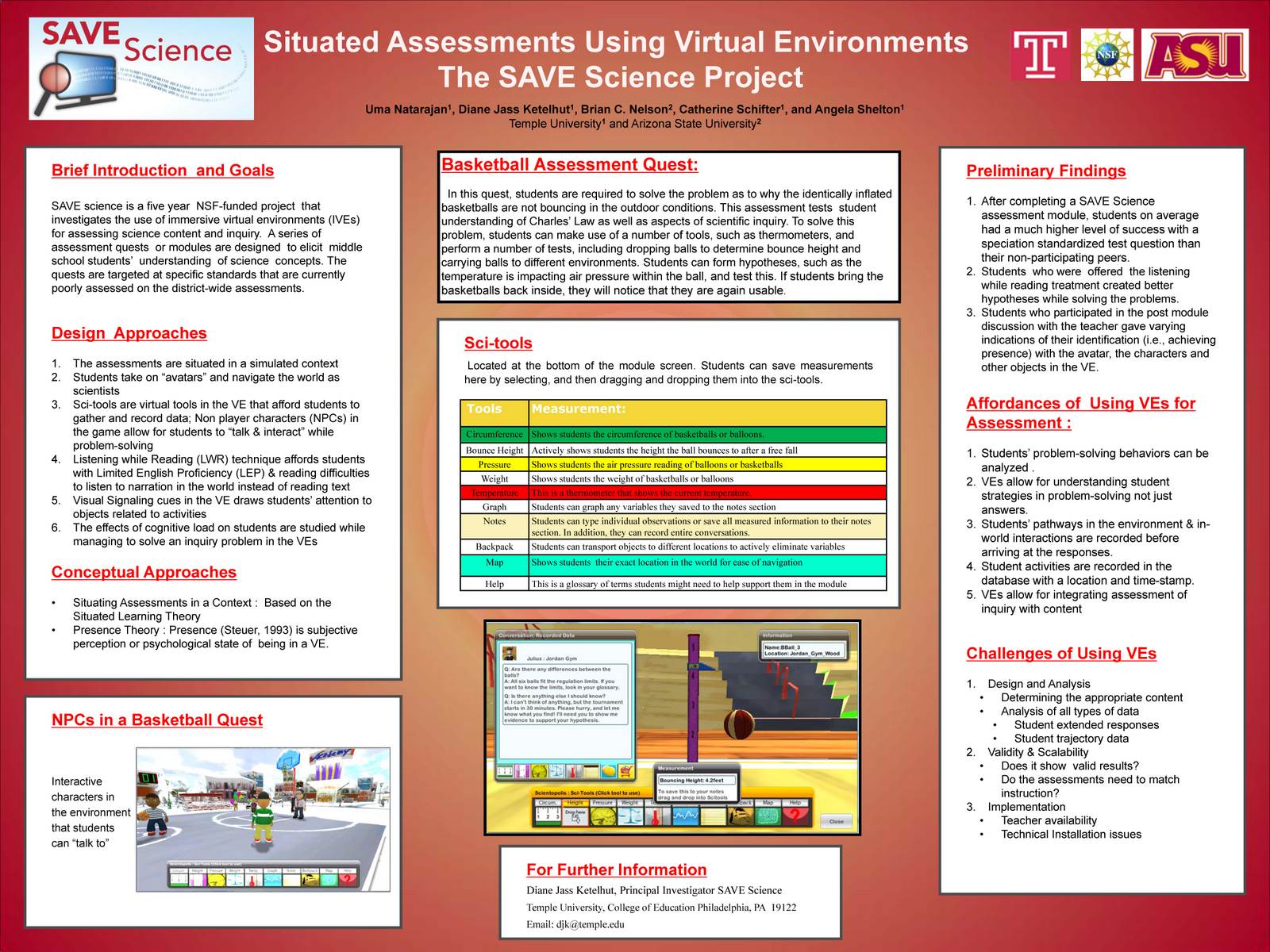
This interactive poster session brings together 12 projects using a range of interactive computer technologies to compare goals, affordances, and challenges across approaches.
This interactive poster session brings together 12 projects using a range of interactive computer technologies to improve science and math learning. The approaches range from interactive simulations to fully-immersive, multi-player games. In addition to increasing communication and collaboration among these researchers, a key goal of this session is to discuss what drives the wide range in approaches to using interactive technologies.
Gaming Arcade
Engage in extended play and in-depth discussion around presenters’ games or virtual environments.
Gaming to Learn
Four NSF-funded gaming project leaders will discuss pedagogical strategies and issues related to designing and implementing STEM educational games.
In this session, panelists from five NSF-funded gaming projects will discuss ways in which digital game-based learning can enable learner-led exploration, taking games beyond the "quiz" model many educators still think of.
Csikszentmihalyi, Mihaly. (1990). Flow: The Psychology of Optimal Experience. HarperCollins.
Powers, William T. (1973). Behavior: The Control of Perception. Chicago: Aldine.
Resources mentioned during the presentation:
- Project websites: http://mathsnacks.org and http://gaming2learn.org
- YouTube video: Trying Very Hard to Make Games that Don't Stink: User Testing at the NMSU Learning Games Lab. http://www.youtube.com/watch?v=qx6lpeaUPSc
- Game: http://www.worldwithoutoil.org/addstory.aspx
- Jane McGonagal on TED Talks: http://www.ted.com/talks/jane_mcgonigal_gaming_can_make_a_better_world.html
- Contact information: Jodi Asbell Clarke EDGE@terc.edu (Educational Gaming Environments Group)