Mathematics

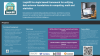
The Missing Middle? General and Special Educators’ Views of Effective Mathematics Instruction

General educators rarely receive adequate training for supporting students with disabilities (SWDs). We suggest a key contributing factor is the longstanding gap between special and general education researchers, which is especially pronounced in mathematics. Researchers from these fields work in isolation from one another, the result of what sociologists term “epistemic bunkers.” These cross-field divisions have pragmatic consequences. Well-established teaching strategies known to support SWDs are untouched in general teacher education.

Author/Presenter

Julie Cohen

Nathan Jones

Lynsey Gibbons

Year
2025
Short Description

General educators rarely receive adequate training for supporting students with disabilities (SWDs). We suggest a key contributing factor is the longstanding gap between special and general education researchers, which is especially pronounced in mathematics.

The Missing Middle? General and Special Educators’ Views of Effective Mathematics Instruction

General educators rarely receive adequate training for supporting students with disabilities (SWDs). We suggest a key contributing factor is the longstanding gap between special and general education researchers, which is especially pronounced in mathematics. Researchers from these fields work in isolation from one another, the result of what sociologists term “epistemic bunkers.” These cross-field divisions have pragmatic consequences. Well-established teaching strategies known to support SWDs are untouched in general teacher education.

Author/Presenter

Julie Cohen

Nathan Jones

Lynsey Gibbons

Year
2025
Short Description

General educators rarely receive adequate training for supporting students with disabilities (SWDs). We suggest a key contributing factor is the longstanding gap between special and general education researchers, which is especially pronounced in mathematics.

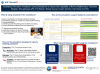
Lesson Study with Caregivers as a Resource for a Culturally Sustaining Mathematics Pedagogy for Multilingual Learners

Research has affirmed the importance of asset-based family partnerships, yet it does not often recognize the complementary roles of multilingual caregivers and teachers to enact culturally sustaining mathematics education.

Author/Presenter

Beatriz Quintos

Tarik Buli

Daniela Steflitsch

Melinda Martin-Beltrán

Lead Organization(s)
Year
2025
Short Description

Research has affirmed the importance of asset-based family partnerships, yet it does not often recognize the complementary roles of multilingual caregivers and teachers to enact culturally sustaining mathematics education. Our theoretical framework brings together the perspectives and tools of positioning theory and community solidarity through a lesson study that integrated the participation of caregivers.

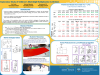
Integrating Math and Science Through Engineering: Illustrative Examples from Curricula Implementation in Middle School Engineering Classrooms

Engineering has emerged as a promising context for STEM integration in K-12 schools. In the previous decade, the field has seen an increase in curricular resources and pedagogical approaches that invite students to utilize mathematics and science as they engage in engineering practices. This Innovation to Practice paper highlights one effort to meaningfully integrate mathematics and science through engineering in middle school classrooms. The STEM-ID engineering course sequence consists of three 18-week middle school engineering courses.

Author/Presenter

Jessica Gale

Dyanne Baptiste Porter

Meltem Alemdar

Sunni Newton

Jasmine Choi

Abeera Rehmat

Roxanne Moore

Year
2025
Short Description

Engineering has emerged as a promising context for STEM integration in K-12 schools. In the previous decade, the field has seen an increase in curricular resources and pedagogical approaches that invite students to utilize mathematics and science as they engage in engineering practices. This Innovation to Practice paper highlights one effort to meaningfully integrate mathematics and science through engineering in middle school classrooms.

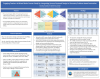
Developing a Visual Model to Represent the Implementation of an Ambitious Mathematics Program

We describe the development of a visual model to represent the implementation of an ambitious mathematics program, which serves as an example of a complex educational reform. Visual models can be both conceptual and empirical, representing aspirational and theoretical perspectives while simultaneously incorporating empirical details specific to the context. Integrating conceptual and empirical aspects leads to tensions in managing the complexity of the model. Our process began with a simple model that guided our empirical work, which involved qualitative analysis.

Author/Presenter

Jeffrey Choppin

Saliha Al

Junnan Li

Charles E. Wilkes II

Ernesto Daniel Calleros

Lead Organization(s)
Year
2025
Short Description

We describe the development of a visual model to represent the implementation of an ambitious mathematics program, which serves as an example of a complex educational reform.

Culturally Responsive Mathematics Engagement Through a Family-Inspired Mathematizing Routine

There is a need for research on effective classroom strategies available for teachers that promote equitable school-family collaborations. Such effective strategies are needed in general but also specifically in the area of content, skill acquisition, and positive dispositions in early mathematics. This exploratory qualitative study looked at a mathematical routine, focused on family-provided photos and artifacts, that elicited children’s mathematical and general observations and inquiries and engaged families in mathematical communications.

Author/Presenter

Jennifer M. Suh

Stephanie C. Calabrese

Lead Organization(s)
Year
2025
Short Description

There is a need for research on effective classroom strategies available for teachers that promote equitable school-family collaborations. Such effective strategies are needed in general but also specifically in the area of content, skill acquisition, and positive dispositions in early mathematics. This exploratory qualitative study looked at a mathematical routine, focused on family-provided photos and artifacts, that elicited children’s mathematical and general observations and inquiries and engaged families in mathematical communications.

Culturally Responsive Mathematics Engagement Through a Family-Inspired Mathematizing Routine

There is a need for research on effective classroom strategies available for teachers that promote equitable school-family collaborations. Such effective strategies are needed in general but also specifically in the area of content, skill acquisition, and positive dispositions in early mathematics. This exploratory qualitative study looked at a mathematical routine, focused on family-provided photos and artifacts, that elicited children’s mathematical and general observations and inquiries and engaged families in mathematical communications.

Author/Presenter

Jennifer M. Suh

Stephanie C. Calabrese

Lead Organization(s)
Year
2025
Short Description

There is a need for research on effective classroom strategies available for teachers that promote equitable school-family collaborations. Such effective strategies are needed in general but also specifically in the area of content, skill acquisition, and positive dispositions in early mathematics. This exploratory qualitative study looked at a mathematical routine, focused on family-provided photos and artifacts, that elicited children’s mathematical and general observations and inquiries and engaged families in mathematical communications.

Culturally Responsive Mathematics Engagement Through a Family-Inspired Mathematizing Routine

There is a need for research on effective classroom strategies available for teachers that promote equitable school-family collaborations. Such effective strategies are needed in general but also specifically in the area of content, skill acquisition, and positive dispositions in early mathematics. This exploratory qualitative study looked at a mathematical routine, focused on family-provided photos and artifacts, that elicited children’s mathematical and general observations and inquiries and engaged families in mathematical communications.

Author/Presenter

Jennifer M. Suh

Stephanie C. Calabrese

Lead Organization(s)
Year
2025
Short Description

There is a need for research on effective classroom strategies available for teachers that promote equitable school-family collaborations. Such effective strategies are needed in general but also specifically in the area of content, skill acquisition, and positive dispositions in early mathematics. This exploratory qualitative study looked at a mathematical routine, focused on family-provided photos and artifacts, that elicited children’s mathematical and general observations and inquiries and engaged families in mathematical communications.

Culturally Responsive Mathematics Engagement Through a Family-Inspired Mathematizing Routine

There is a need for research on effective classroom strategies available for teachers that promote equitable school-family collaborations. Such effective strategies are needed in general but also specifically in the area of content, skill acquisition, and positive dispositions in early mathematics. This exploratory qualitative study looked at a mathematical routine, focused on family-provided photos and artifacts, that elicited children’s mathematical and general observations and inquiries and engaged families in mathematical communications.

Author/Presenter

Jennifer M. Suh

Stephanie C. Calabrese

Lead Organization(s)
Year
2025
Short Description

There is a need for research on effective classroom strategies available for teachers that promote equitable school-family collaborations. Such effective strategies are needed in general but also specifically in the area of content, skill acquisition, and positive dispositions in early mathematics. This exploratory qualitative study looked at a mathematical routine, focused on family-provided photos and artifacts, that elicited children’s mathematical and general observations and inquiries and engaged families in mathematical communications.

A Usability Analysis and Consequences of Testing Exploration of the Problem-Solving Measures–Computer-Adaptive Test

Testing is a part of education around the world; however, there are concerns that consequences of testing is underexplored within current educational scholarship. Moreover, usability studies are rare within education. One aim of the present study was to explore the usability of a mathematics problem-solving test called the Problem Solving Measures–Computer-Adaptive Test (PSM-CAT) designed for grades six to eight students (ages 11–14).

Author/Presenter

Sophie Grace King

Jonathan David Bostic

Toni A. May

Gregory E. Stone

Year
2025
Short Description

Testing is a part of education around the world; however, there are concerns that consequences of testing is underexplored within current educational scholarship. Moreover, usability studies are rare within education. One aim of the present study was to explore the usability of a mathematics problem-solving test called the Problem Solving Measures–Computer-Adaptive Test (PSM-CAT) designed for grades six to eight students (ages 11–14). The second aim of this mixed-methods research was to unpack consequences of testing validity evidence related to the results and test interpretations, leveraging the voices of participants.