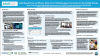
PBS News Hour Student Reporting Labs StoryMaker: STEM-Integrated Student Journalism
PI: Leah Clapman, PBS NewsHour
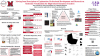
This poster provides an overview of our three-year project where researchers are using a design-based research approach to develop, pilot, and refine a set of coordinated and complementary practice-based activities that teacher education programs can deploy to provide practice-based learning opportunities for preservice teachers. The goal is to help the preservice teachers to engage in authentic, purposeful, and scaffolded approximations of practice as they develop their ability to facilitate argumentation-focused discussions in mathematics and science.
MOSART HS PS developed assessment tools based on both NRC Standards and NGSS for high school chemistry and physics. The 500 new test items were combined into instruments and validated by content experts. Comprehensive data from a nationally representative sample of 12,000 high school students and their teachers measures the content knowledge of both groups and allows the estimation of item characteristics. Pre- and post-tests associate yearly knowledge gains with teacher characteristics and pedagogies used.
Our vision is to make computational modeling a sustained practice in middle school science classrooms. We are working closely with teachers to design a tool and curricula that integrate computational modeling with data practices and enables students to move towards unpacking models and their underlying assumptions. Our research questions involve investigating 1. students modeling trajectories in this environment; 2. how classrooms norms develop over time; and, 3. the interplay between computational modeling and data practices.
Aqualab is an online video game to teach scientific practices in the context of life sciences for middle school. Students use science practices of experimentation, modeling, and argumentation to investigate questions related to aquatic ecosystems. The project is developing and scaffolding layers of science practices within the gameplay, and exploring how learning progressions can be empirically derived from game data. The findings will be used to create personalized interventions to improve student learning outcomes.
Through the integration of STEM content and literacy, this project studies the ways teachers implement literacy practices in the STEM classroom. Teachers will facilitate instruction using scenarios that present students with STEM-related issues, presented as scenarios. After reading and engaging with math and science content, students write a source-based argument in which they state a claim, support the claim with evidence from the texts, and explain the multiple perspectives on the issue.
This poster presents results from a randomized controlled trial that examined the efficacy of the Amplify Science Middle School curriculum for improving seventh grade students learning in relation to NGSS performance expectations in physical science. Though the analysis is ongoing, initial findings from the 2019-20 school year demonstrate evidence of promise of the NGSS-designed curriculum materials for supporting three-dimensional teaching and learning. This poster showcases the results and considers implications for research, policy, and practice.